
MFN WOULD RESTRICT ACCESS TO LIFE-SAVING MEDICINES. READ OUR LETTER TODAY

Protect Patients, Oppose MFN


Importing foreign price controls would import systems that make patients wait.
MFN would import foreign pricing systems that have consistently delayed patient access to life-saving care and valued certain patients’ lives over others. The impact would disrupt innovation pipelines and leave patients without life-saving care.
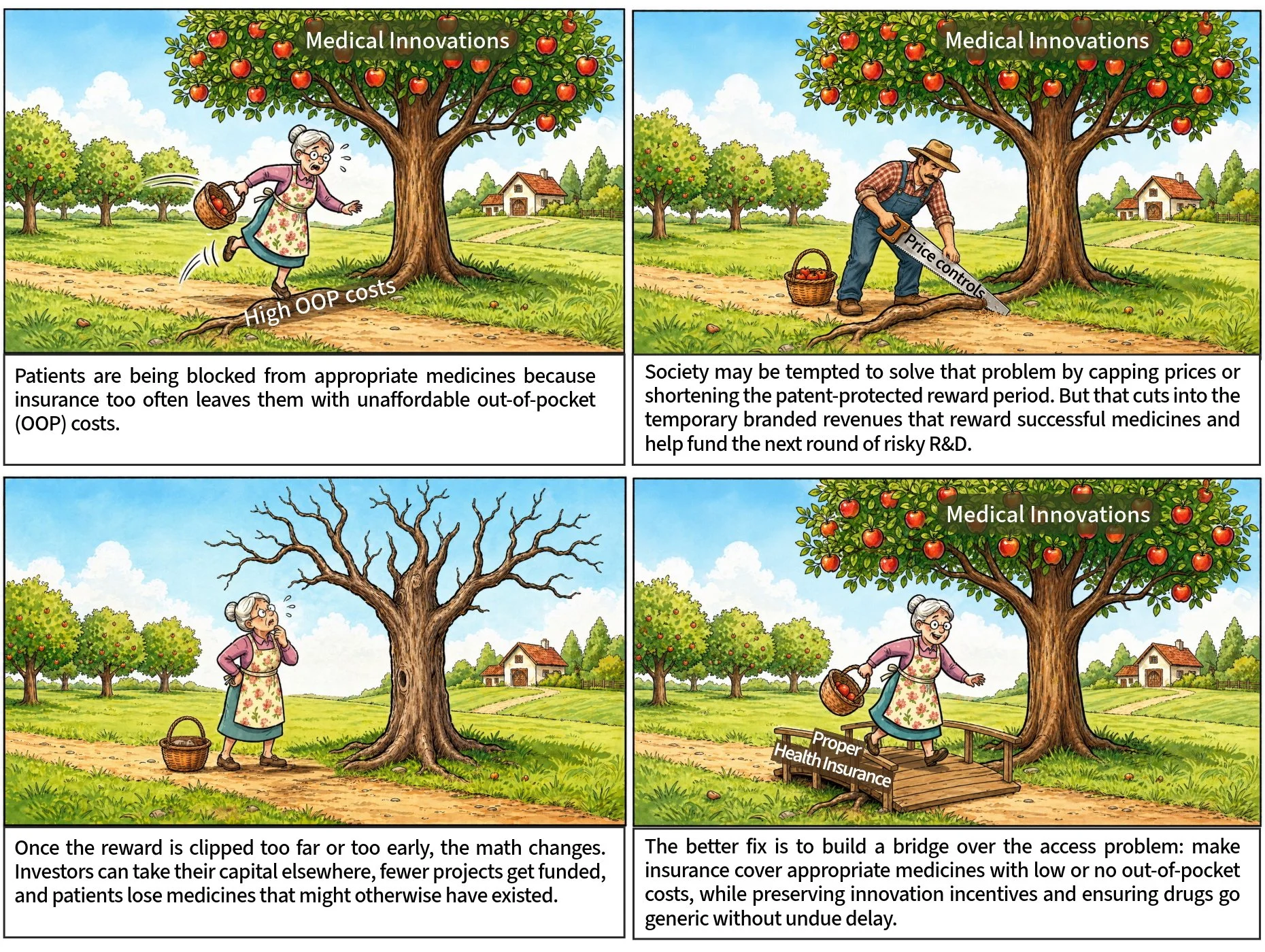
Affordability issues for American patients are real. But MFN does nothing to address the true cause of financial strain for patients — harmful insurance practices that leave patients with high out-of-pocket costs and deductibles at the pharmacy counter.
Patients Stand Up in Opposition of Most Favored Nation (MFN) Policy
July 22, 2026
Dear Members of Congress and Administration Officials,
We write as patients, people with disabilities, caregivers, and the organizations that represent us – people who live every day with serious, chronic, and rare diseases, and who depend on continued medical progress to survive and to thrive.
We are urging you to oppose Most Favored Nation (MFN) drug pricing policies that would import foreign prices set using systems known to delay and deny patient access, and to instead advance patient-centered solutions that can lower costs without sacrificing American innovation.
Affordability challenges are real. Financial strain on patients and families is real. The desire for a policy solution is understandable, and we, more than anyone, share the goal of making medicines more affordable and more accessible.
MFN does not achieve that goal. Instead, it would tie U.S. prices to other countries’ health systems that explicitly ration care, delay access to new treatments, and, by design, say no to therapies that do not meet their cost thresholds – no matter how transformative the therapy may be. That is not a model we should import. It is a model we should learn from and avoid.
Today’s prescription drug affordability challenges lie at the pharmacy counter, where patients are consistently met with high out-of-pocket costs and deductibles despite having paid their insurance premiums. MFN will not fix an insurance system that forces people with chronic and disabling conditions to subsidize those who do not, nor will it rein in the harmful practices of pharmacy middlemen.
What MFN will do is undervalue people’s lives and leave them without future breakthrough treatments and cures.
In the foreign countries MFN intends to model, decisions about which treatments are available to patients are often guided by metrics like the Quality-Adjusted Life Year (QALY). These metrics assign lower values to the lives of seniors, people with disabilities, and those living with chronic or rare diseases. For many, that would mean being denied access to treatments that could extend or improve their lives. It is the model many European countries and Canada have adopted, and it is a primary reason patients from those countries often seek care in the United States.
American policymakers have long protected patients and people with disabilities from discriminatory pricing metrics like QALYs and focused on ensuring that every patient is valued equally. Codifying MFN would overturn this key protection, turning instead to faulty government formulas that place a higher value on certain patients’ lives over others.
Further, these other countries have demonstrated a willingness to let patients go without – a cost we have previously been unwilling to pay. American patients today have faster and broader access to new medicines than patients in nearly every other country in the world. According to IQVIA, 79% of new medicines approved by both U.S. and European regulators between 2014 and 2022 were available first in the United States. In 22 of 27 European Union countries, patients wait a year or longer after approval to access new treatments, and many medicines never become available at all. Delaying treatment access can be fatal for patients facing life-threatening diagnoses. Are U.S. policymakers willing to accept these consequences as a necessary byproduct of MFN?
Finally, the United States has long been the medicine cabinet for the world, utilizing high-risk, high-reward investment to bring forth treatments for cancer, rare diseases, and other serious conditions that previously went untreated or meant a life of major disability and complications. The investment calculus necessary to achieve this success is already difficult. MFN will decimate it. And then the question becomes: If the American biotech ecosystem starts viewing innovation as a lousy investment, where will future cures and life-changing treatments come from?
For us, the bottom line is simple: we must address the root cause of affordability instead of replicating policies from abroad where treatments arrive late or not at all. Instead, Congress must prioritize policies that put patients first by fixing insurance, improving affordability at the pharmacy, reducing coverage barriers, increasing transparency, and encouraging foreign countries to start contributing their fair share to the innovation they are benefiting from.
We do not have to choose between affordability and access to innovation. We urge Congress to reject proposed MFN pricing policies and advance solutions that deliver both.
Respectfully,

To view the letter as a PDF, click here.









ADDITIONAL MATERIALS: