
Price Controls Don’t Fix an Insurance Problem
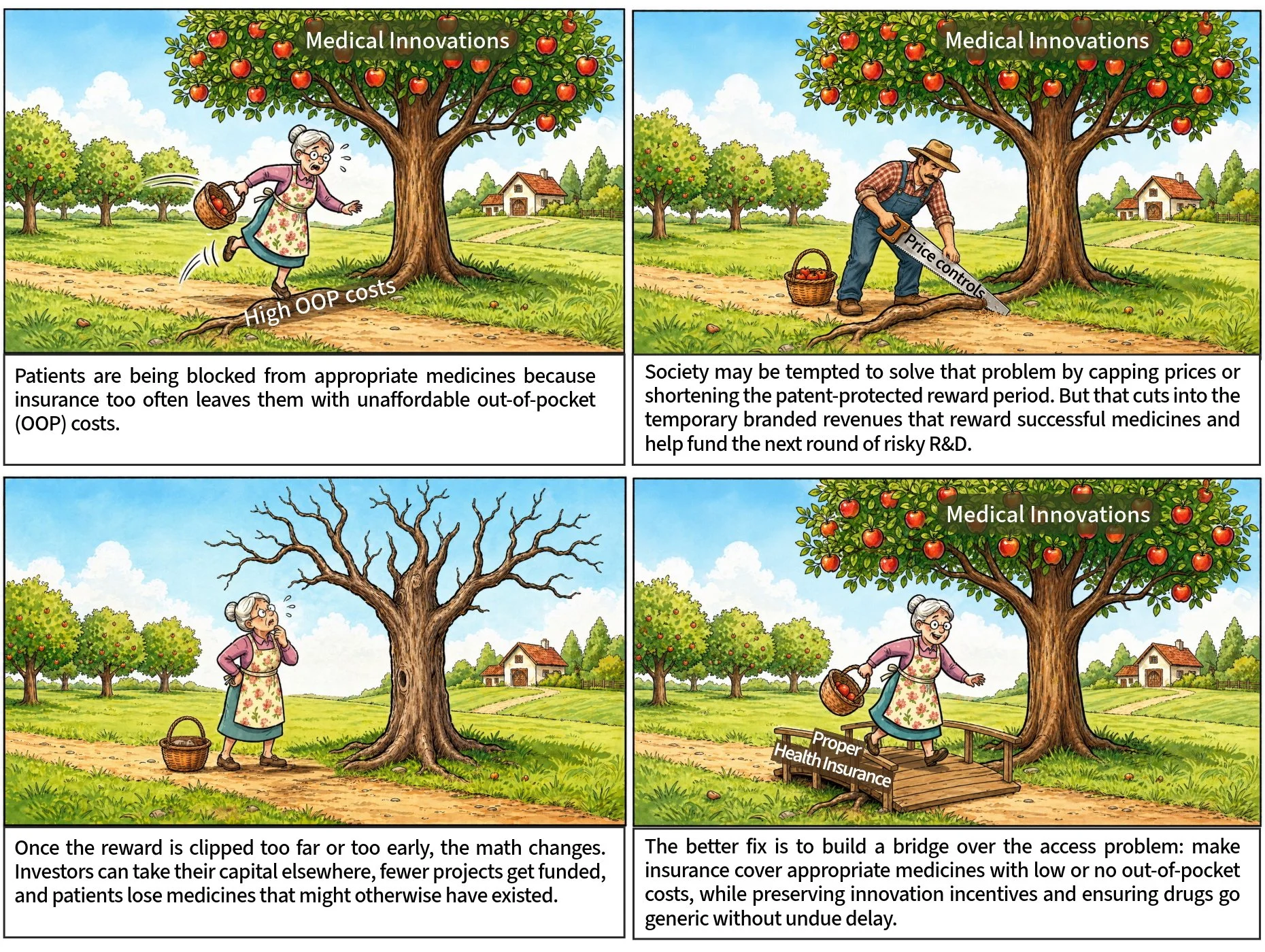
This cartoon illustrates how high OOP costs are the branch blocking patients from appropriate medicines, and the fix is to build the bridge: proper insurance with low OOP costs, because that is what makes anything in healthcare affordable for patients.
Our Defining Edge: Protecting Innovation
In this series, we’re exploring how we use our defining edge to bring clarity and credibility to policy debates. Most of us pay our health insurance premiums so that if we do get sick or injured, the treatments our doctors prescribe will be covered. But increasingly, that coverage is coming with high out-of-pocket costs.
National Kidney Month: The Human Cost of Insurance Barriers
For people living with chronic disease, health insurance shouldn’t be another hurdle. We should spend our energy and focus fighting for the best lives we can, not fighting against insurance companies. To learn more about how to #FixInsurance so it works as it should, visit https://www.nopatientleftbehind.org/fixinsurance.
Fixing Insurance Gaps: A Roadmap for Improving ACA Health Plan Coverage
This Issue Brief presents new data showing that, despite increased federal subsidies and enrollment since 2022, many ACA exchange plans have raised OOP drug costs—undermining the law’s core promise of affordable care.

Demand first dollar coverage for your medicines
1 in 7 Americans has an autoimmune disease. But some insurance plans charge high out-of-pocket costs for prescribed medicines? Why? We paid our premiums. Don't make patients pay twice.

Why is there a copay for cancer medicine?
Why do some health plans charge out-of-pocket costs for cancer treatments? Doctor-prescribed treatments authorized by your insurer should have zero copays.

Public Comment: Demand Equitable Contribution to Biomedical Innovation
American patients and taxpayers disproportionately fund the global R&D ecosystem that enables life- saving medical advances, while wealthy countries impose price controls that underpay by as much as 60% relative to their economic capacity. Adopting the Most Favored Nation (MFN) approach for price setting undermines U.S. leadership in medical innovation, hurts patients at home and abroad, and also impairs global progress against disease.

Time to End Foreign Free Riding and Fix the Global Imbalance in Biomedical Innovation
American patients enjoy significant health benefits from groundbreaking medicines developed right here at home. Yet, despite rhetoric to the contrary, the prices Americans pay for these innovative treatments are substantially below their true societal value. If other countries paid for them fairly, we would enjoy more breakthroughs, faster, with more savings.


Importing European-Style Price Controls Will Gut US Biomedical Innovation
The US system of private, market-based pricing is the foundation of America’s global leadership in biomedical innovation. Proposals to import government price controls from wealthy foreign trade competitors ignore the extraordinary value that the US pricing system delivers to patients, employers, taxpayers, and health plans.

Valuing Healthcare Innovation
When measuring the value of new medicines, some countries rely on an outdated and incomplete methodology that understates the true value of innovative treatments. Setting prices in the U.S. based on these artificially low estimates of value would reduce investment in biomedical R&D and yield fewer novel medicines that address critical unmet needs of patients.

Foreign countries rely on flawed and outdated HTA or ”value assessment” methods to justify low prices for medicines
The methods many countries use to evaluate new medicines significantly underestimate the true societal benefits of innovative treatments. When high-income countries use traditional methods as a bargaining tool to deny coverage and/or secure lower prices, they free ride on the R&D investments of others and reduce patient access to novel medicines in their own countries.

Protect American Innovation
America is the global leader in biomedical innovation because it has a market that values new medicines. When other countries pay less, they are free-riding on our willingness to pay for new treatments. Forcing drug manufacturers to charge the same price that these other countries mandate would backfire. Instead, policymakers should use trade negotiations to pressure other wealthy countries to pay their fair share.

Affordability & Innovation
At No Patient Left Behind, we believe for insurance to really be insurance it should fully cover the drugs your doctor prescribes when you’re sick–without high out-of-pocket costs.

The Value of Medicines
Medicines help us feel better, but there are so many other things that make medicines valuable. Learn about the many benefits of medicines and the ways that insurers overlook their value to all of us.