

Featured materials
NPLB partners with leading health economists, innovators, investors, and academics to conduct research and generate insights that help everyone understand healthcare and the biomedical innovation ecosystem.
Our team builds on this work to create clear and concise explainers, videos, and other materials that advance our mission to defend biomedical affordability and innovation.
NPLB 2025 IMPACT REPORT:
See how we’re working to ensure biotech innovation and affordability for patients, both now and in the future
Policymakers, health economists, the media, and the public regularly debate issues that will shape the future of drug development and access. But discussions rarely include the people risking their careers and capital to create life-saving cures for patients and society. By combining front-line biotech expertise, specialist investor insight, and a communications lab built to engage the public, NPLB brings speed, clarity, and credibility to policy debates.
Presentations
FEATURED WEBINAR

How the IRA makes new small molecule biotech R&D uninvestable for diseases of aging
By price setting small molecule medicines after only 9 years on the market, the Inflation Reduction Act threatens investments in future cures. The law’s disparate treatment of small and large molecules will warp R&D and result in fewer new cures, particularly those for cancer and other diseases of aging.

When assessing the viability of an investment, investors attempt to calculate the business’s or product’s net-present value (NPV). The NPV combines a project’s likelihood of success with an estimate of the money it may make over time to determine its present value to investors. The price-setting provisions of the IRA reduce the NPV of any drug candidate at launch by 40%. If investors aren’t confident they will earn a return on their investment, they won’t invest in new drug candidates, and most ideas will never leave the laboratory.



Europe and the United Kingdom undervalue new medicines. If the United States adopted European-style price controls, the world would benefit from fewer new cures–and we’d all be worse off.




This slide deck contains a powerful visual illustration of the biotech industry’s race to find a cure for Hepatitis C. Run through the slide deck quickly to appreciate the sheer level of hustle that won the world a cure, and then more slowly to appreciate every move in the chess game of mergers & acquisitions.
Videos
FEATURED VIDEO

The Value of Medicines
Medicines do so much more than help the patient that's treated today. Considering a drug's societal value shows we may value them a lot more than we had thought.

Over 600,000 Americans suffer from autoimmune nephropathy, which occurs when your immune system attacks your kidneys.
Behind every statistic is a person fighting for more time, and behind them is a team of scientists, investors, and patient advocates working toward a cure.

The Massachusetts biotech industry leads the world in innovation and drug development. But its companies don’t have the support of its own leaders. Why?

An independent and autonomous FDA is a key part of ensuring that the biotech innovation ecosystem can continue to thrive. As an agency, it is the gold standard globally for determining risk-reward benefit in therapies for patients, and the world looks to it to lead the way. The people at the FDA are trying hard to make sure that we actually make progress, and their work is a service to the American public.

America is the global leader in biomedical innovation because it has a market that values new medicines. When other countries pay less, they are free-riding on our willingness to pay for new treatments. Forcing drug manufacturers to charge the same price that these other countries mandate would backfire. Instead, policymakers should use trade negotiations to pressure other wealthy countries to pay their fair share.

Drug development is costly. Who takes the risk and funds the hope of new medicines? Investors do. How do they know which ones will work? They often don't.

At No Patient Left Behind, we believe for insurance to really be insurance it should fully cover the drugs your doctor prescribes when you’re sick–without high out-of-pocket costs.

Who creates new medicines? It takes teams of innovators working with the support of private funding to reach risky new summits and provide patients with new cures.


Medicines help us feel better, but there are so many other things that make medicines valuable. Learn about the many benefits of medicines and the ways that insurers overlook their value to all of us.
Comics
FEATURED COMIC
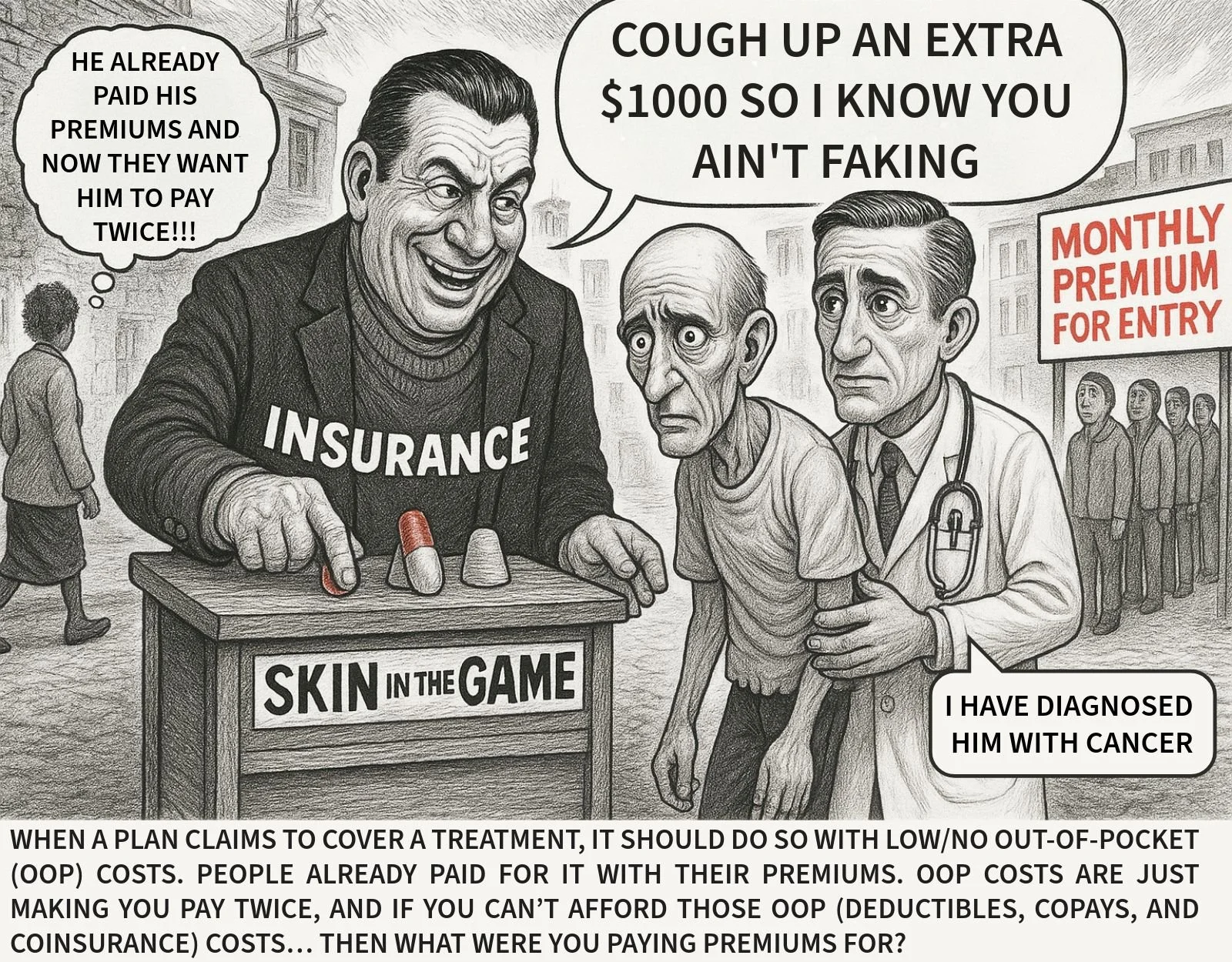
Skin In the Game: An Insurance Shame
No one fakes cancer for free chemo. Premiums are supposed to cover the cost when you get sick; if out-of-pocket charges keep people from starting the treatment their doctor prescribes, what were they paying premiums for?
Let’s #FixInsurance so that when a plan says it covers a medicine, patients aren’t billed a second time at the very moment they need it.
Comic by: Darius Walker (NPLB Fellow)
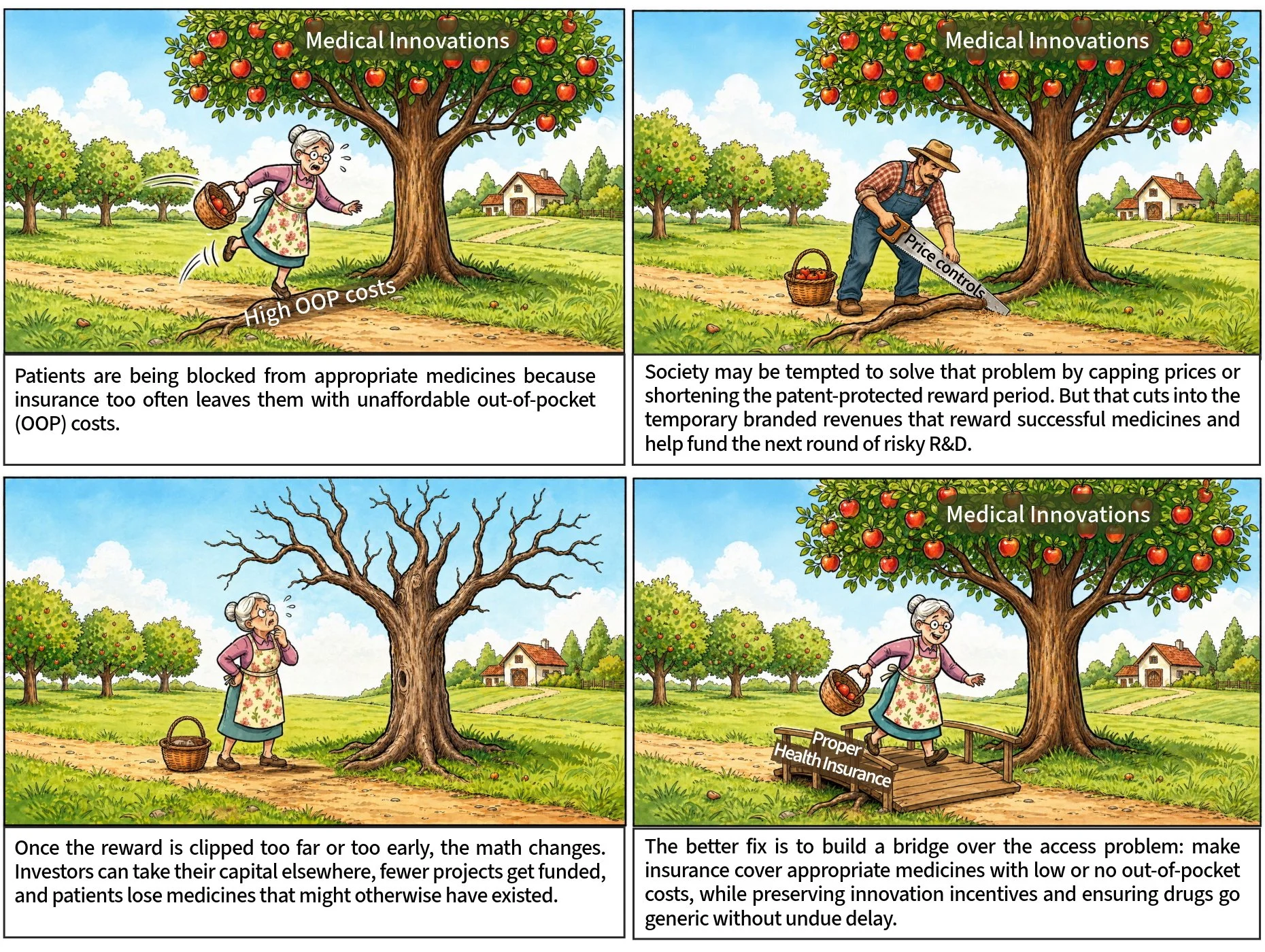
This cartoon illustrates how high OOP costs are the branch blocking patients from appropriate medicines, and the fix is to build the bridge: proper insurance with low OOP costs, because that is what makes anything in healthcare affordable for patients.
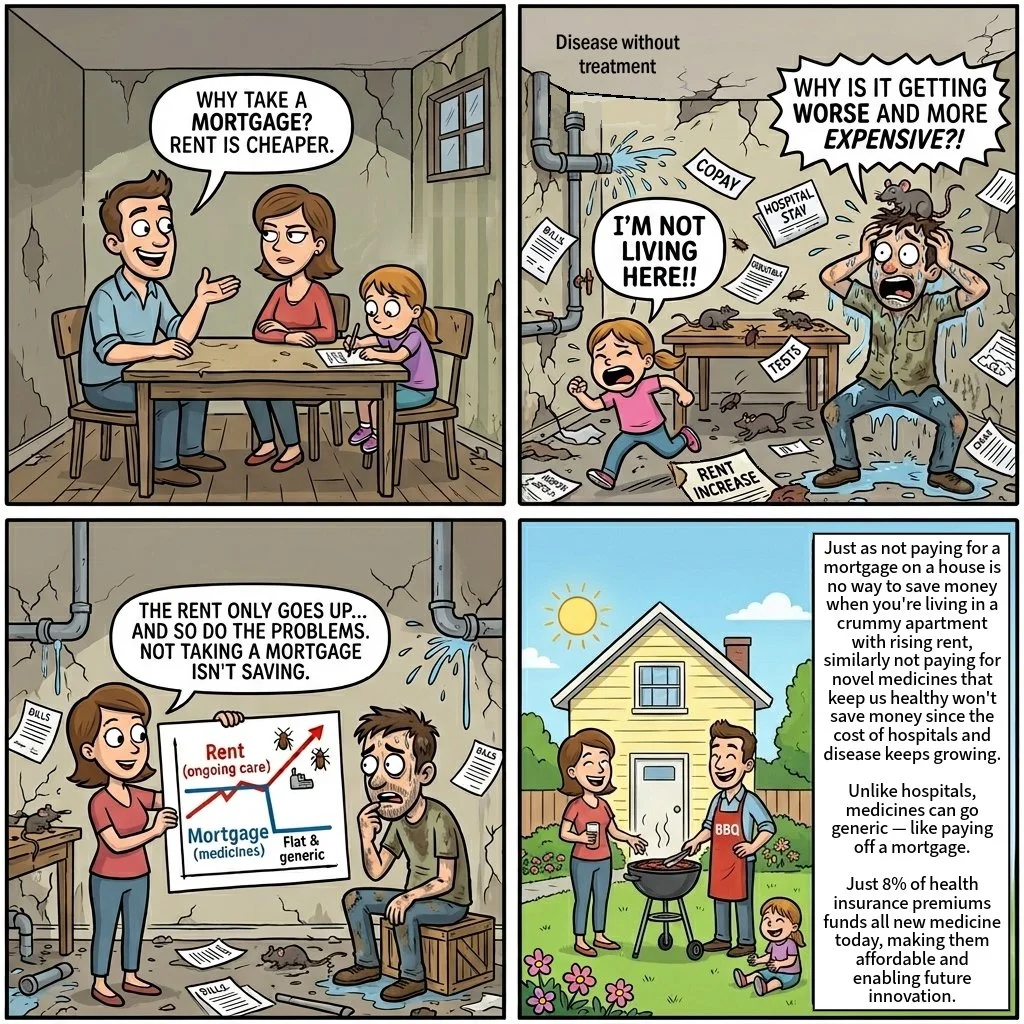
This cartoon illustrates the value or mortgage payments versus rent, as an analogy for patented drugs that will eventually go generic and drop in price.
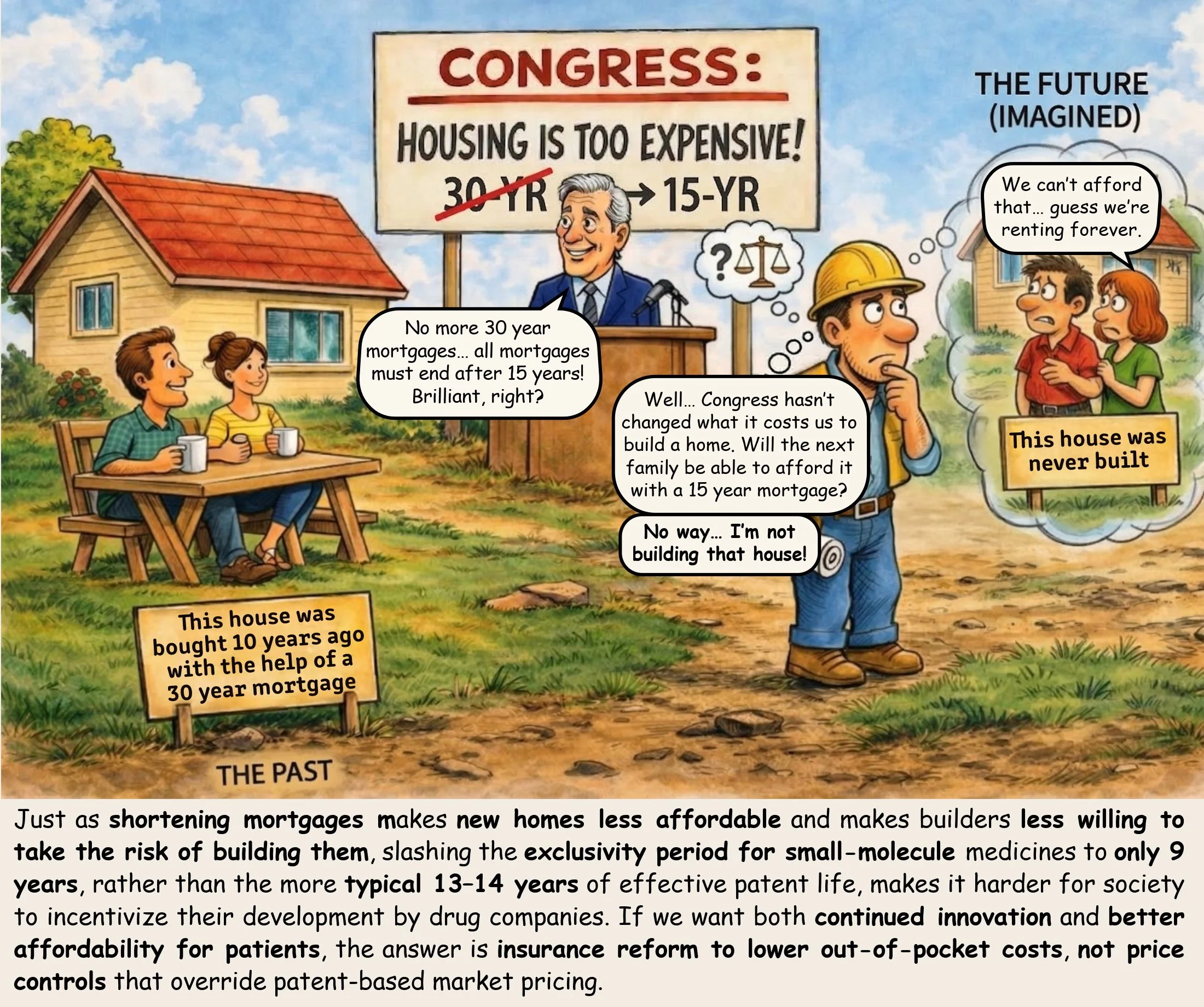
This cartoon illustrates the risk of shorter patent windows on continued biopharmaceutical innovation.
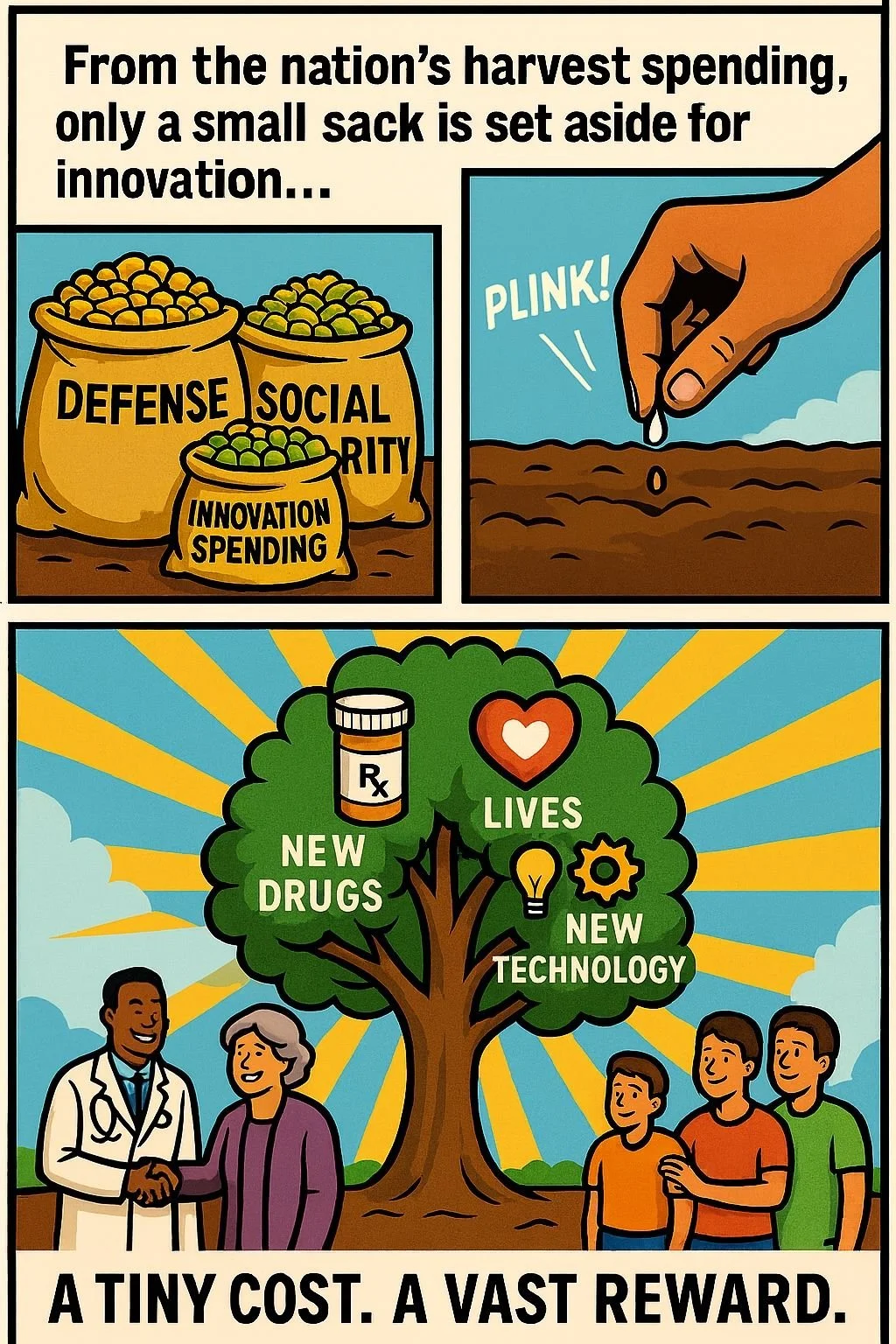
This cartoon illustrates the value produced by the small cost of supporting biopharmaceutical innovation.
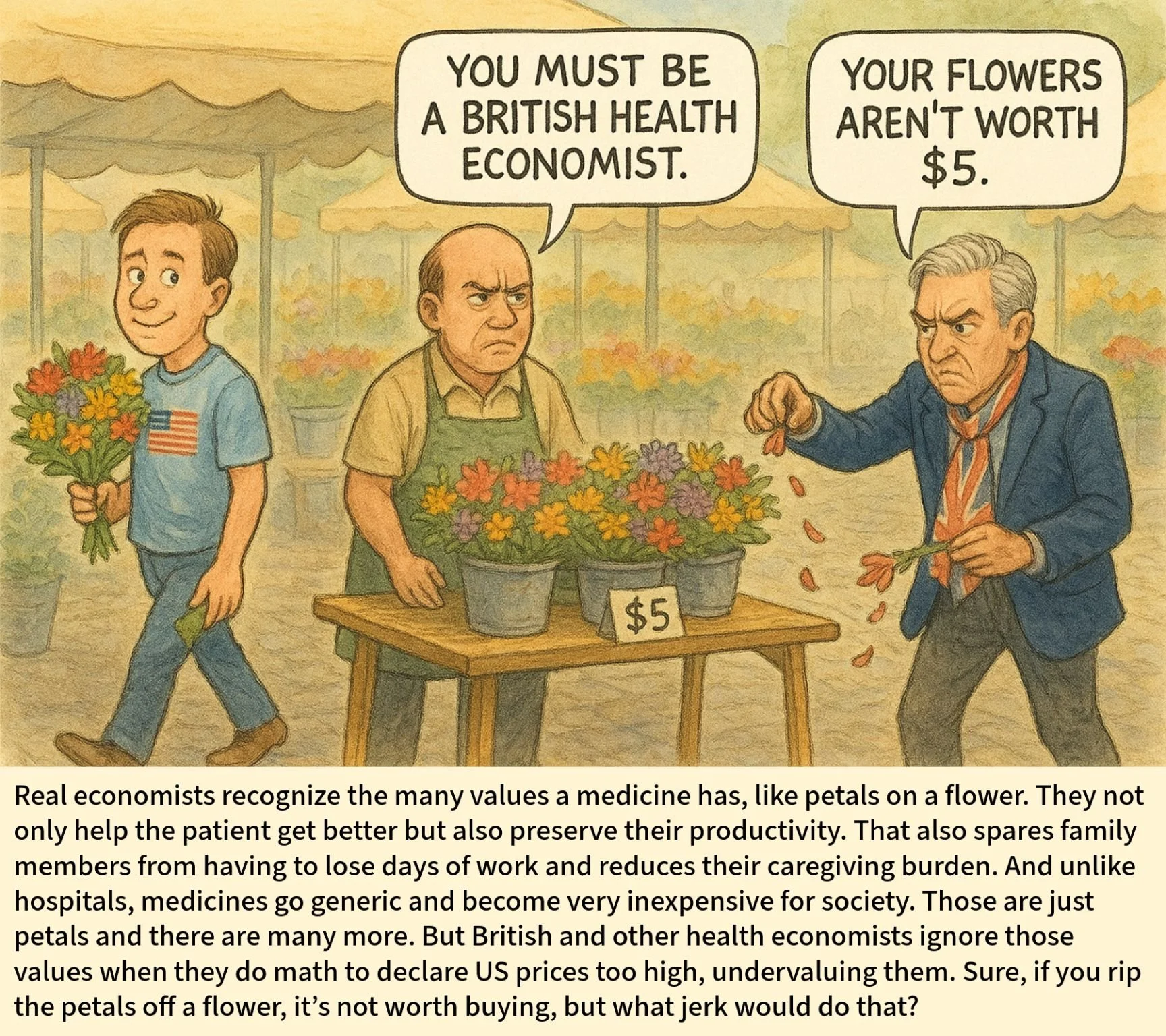
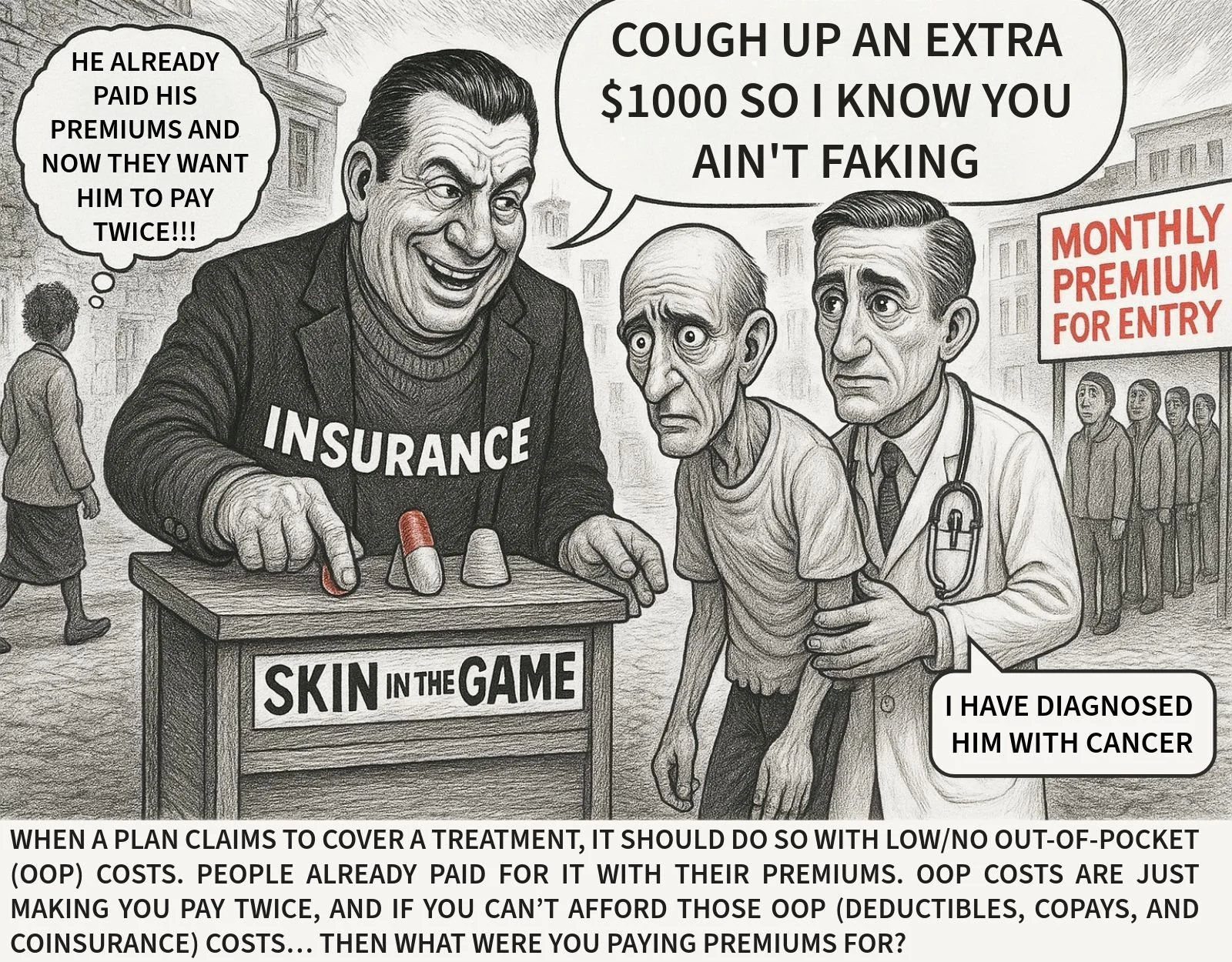
This cartoon illustrates the absurdity of requiring “skin in the game” for life-saving, prescribed medications.
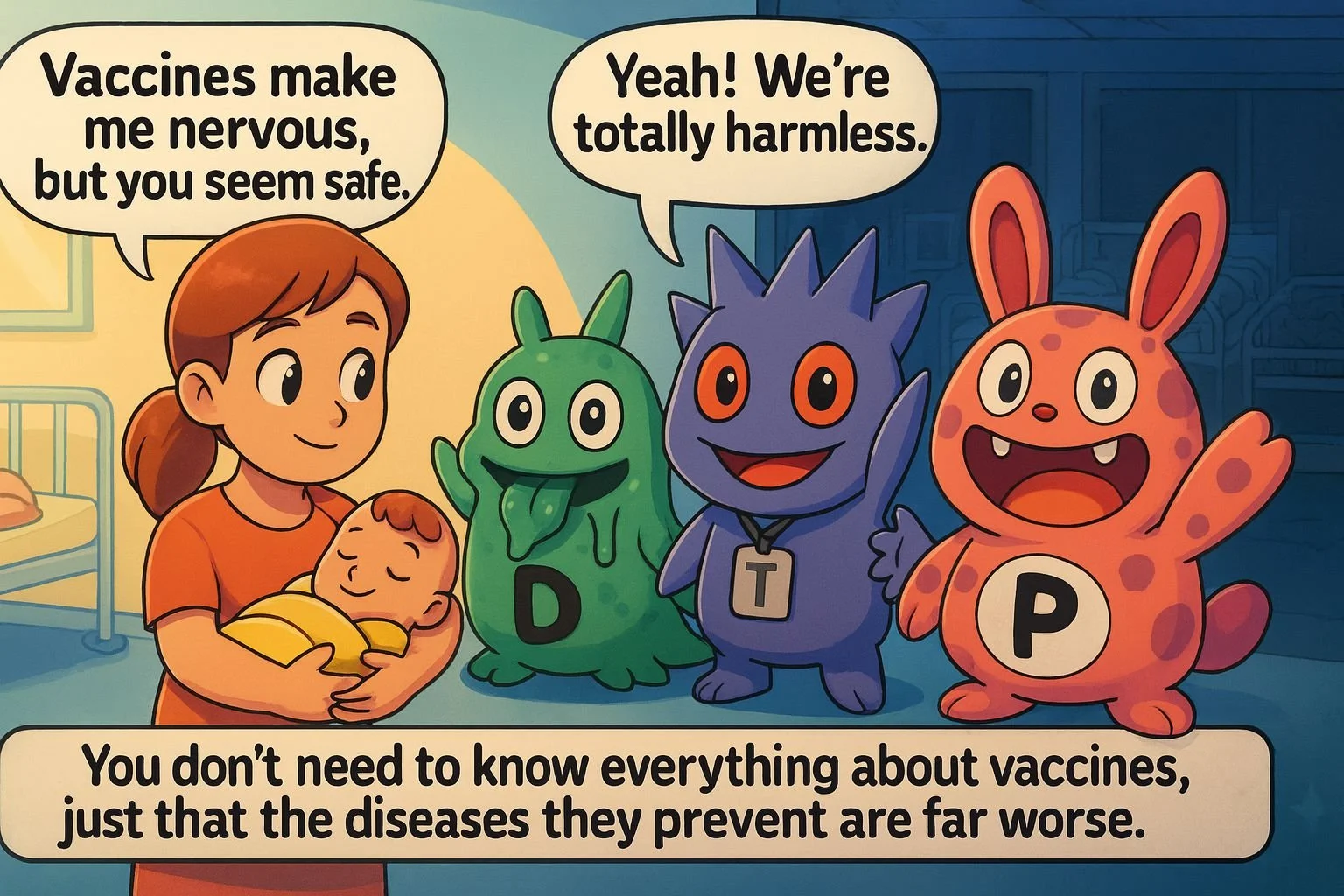
This cartoon simplifies the conversation on vaccines by reminding us of the obvious truth—vaccines are much better than the diseases they prevent.

This cartoon forces us to imagine a scenario where we let biotech innovation come to a grinding halt.

This cartoon explains the real rationale behind direct-to-consumer advertising for prescription drugs.

This cartoon serves as a stark reminder that measles is not just a childhood rash and should not be treated as such.

This cartoon exposes the truth. No one would fake cancer for free chemo, yet real patients can’t afford it. The satire forces discomfort where it belongs—with those who have the power to fix a broken system.
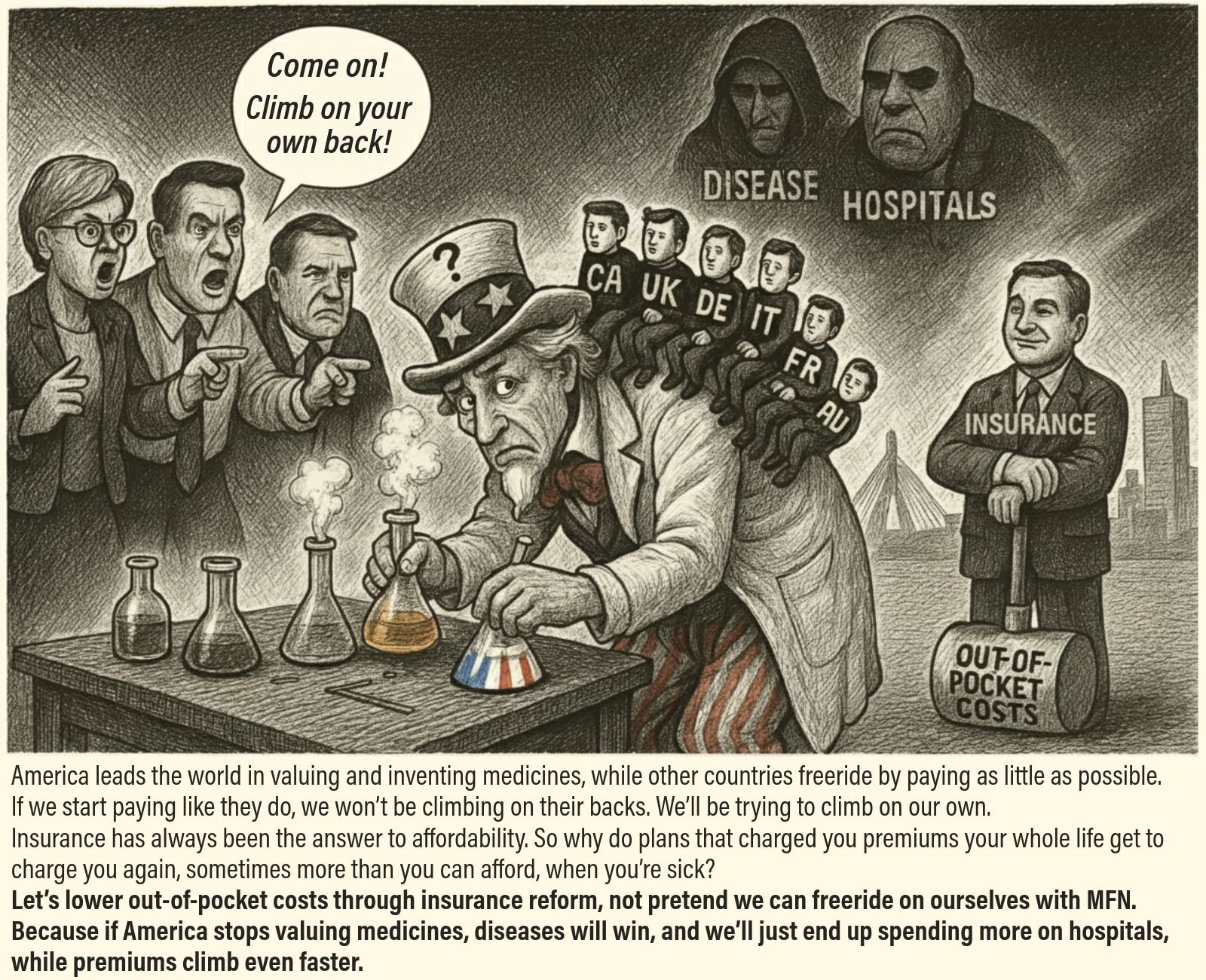
This cartoon personifies global free-riding on American tax-funded biopharmaceutical innovation.
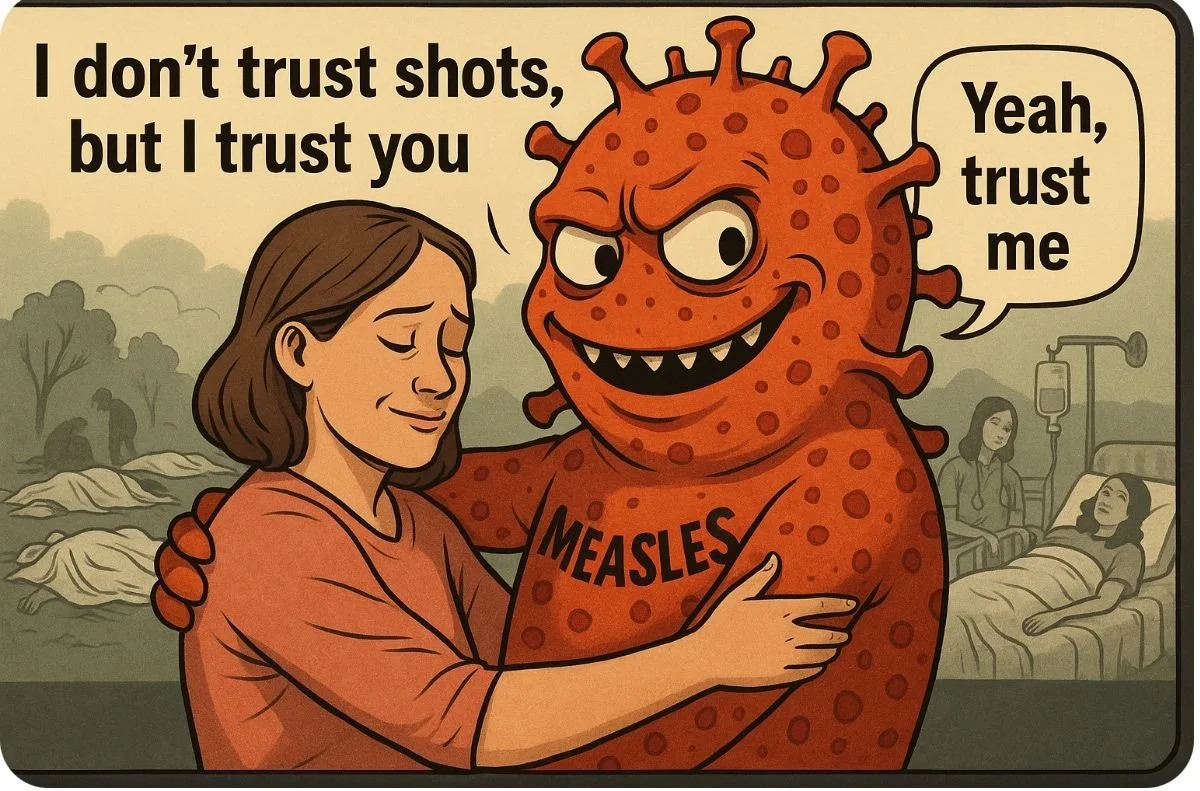
This cartoon flips the usual debate about vaccines. You don’t need to know everything about vaccines to know one thing for sure: measles kills.
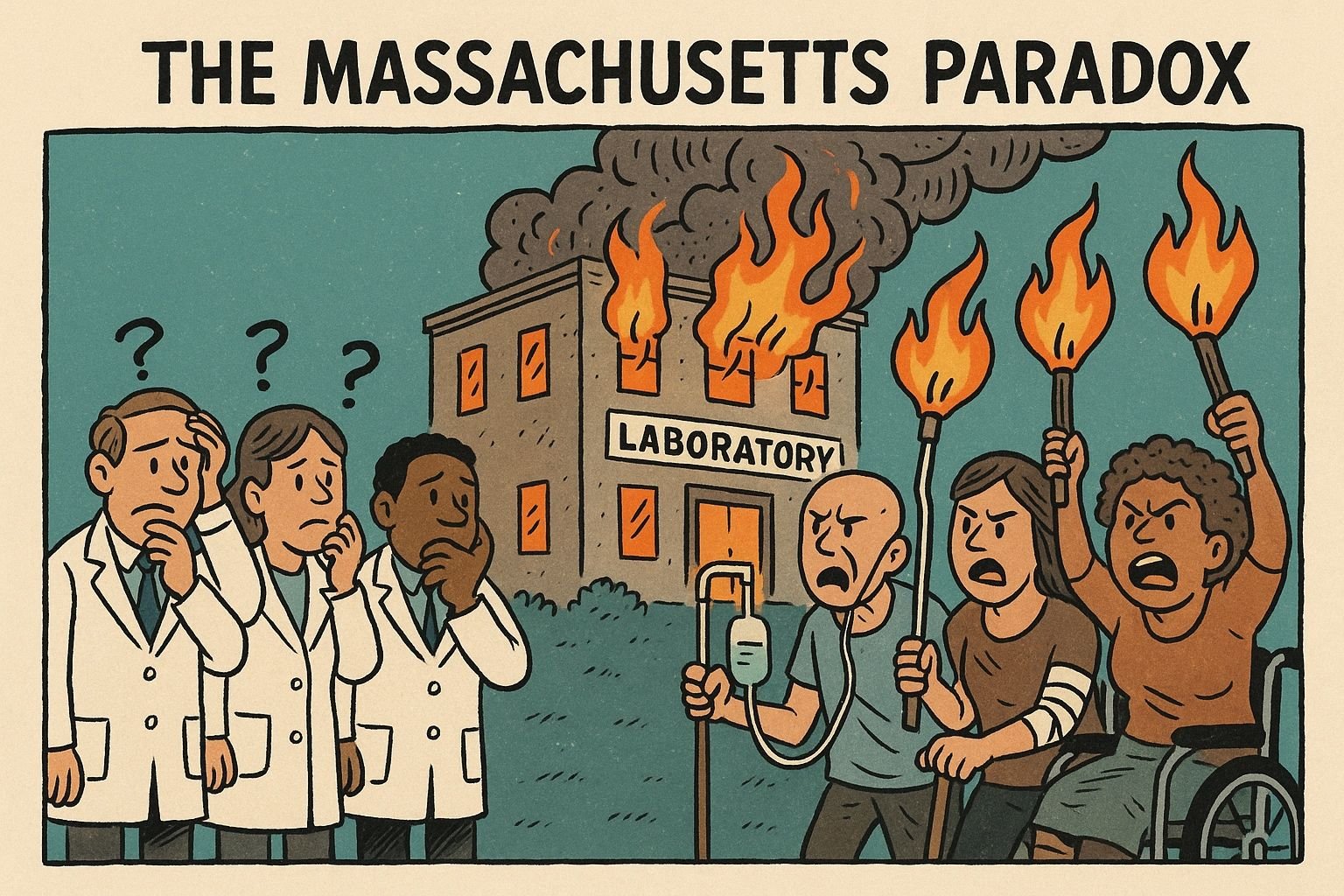
This cartoon tells the story of the MA Paradox—where patients turn against the very industry working to develop life-saving treatments.
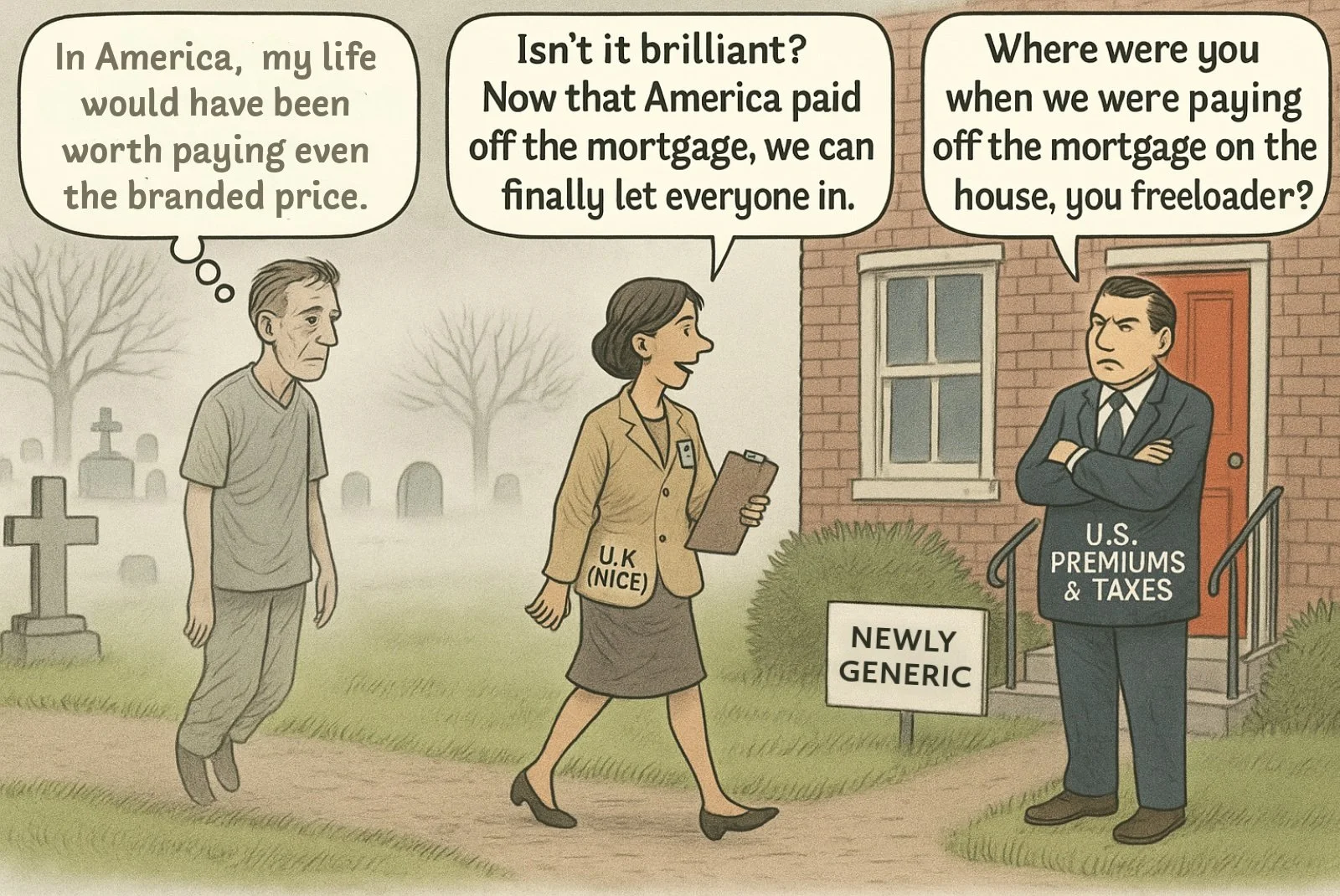
This cartoon depicts the home mortgage analogy for drug innovation and the global free-ride on Americans funding the system.
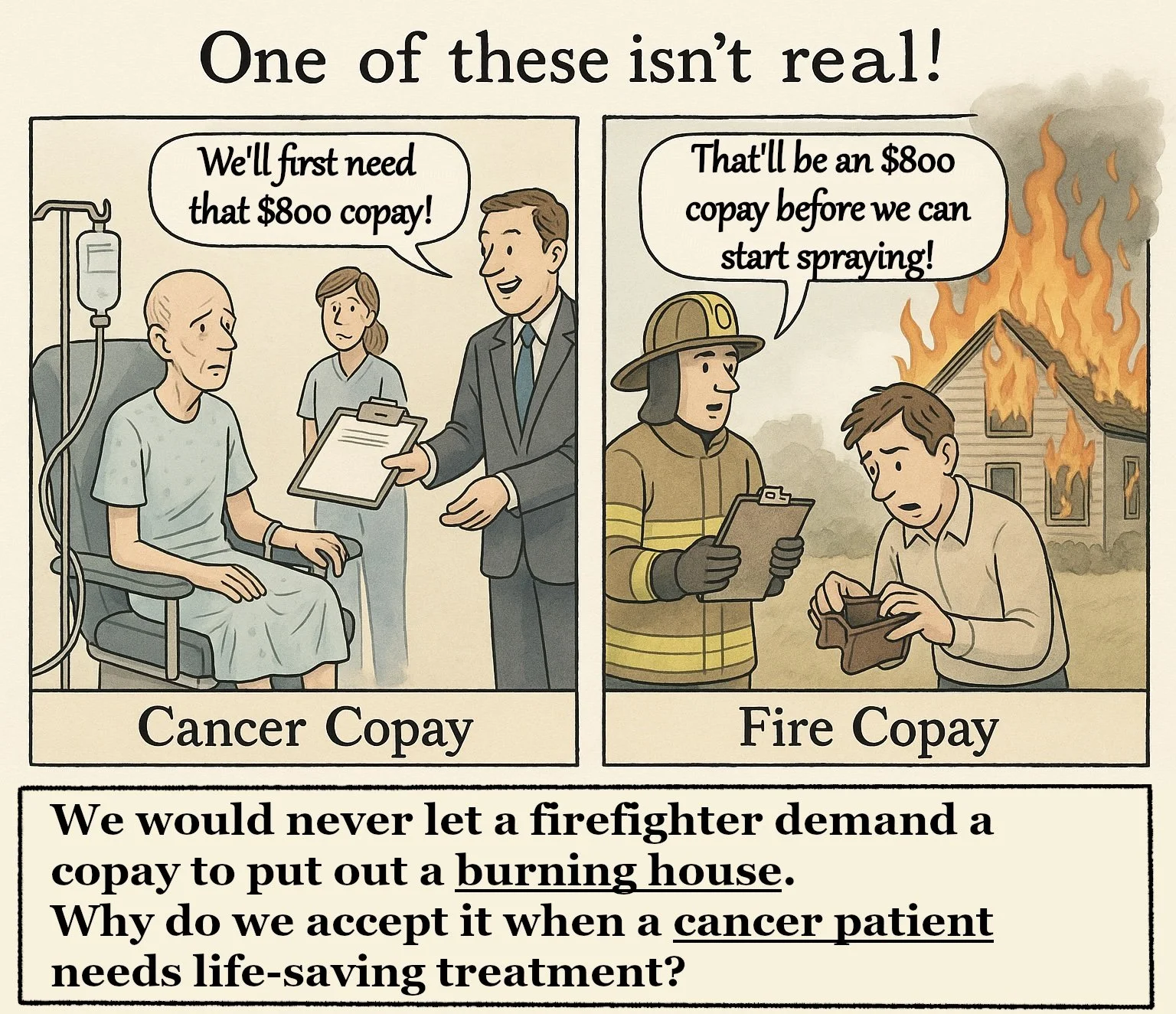
This cartoon compares chemo copays to firefighter copays, showcasing the absurdity of paying drug copays after paying premiums.
Research
FEATURED RESEARCH

Valuing the Societal Impact of Medicines and Other Health Technologies: A User Guide to Current Best Practices
A new paper published in Forum for Health Economics & Policy by twelve leading health economists explains why the conventional math used to value medicines falls short, and it lays out a consensus “user’s guide” for operationalizing overlooked elements of societal value.
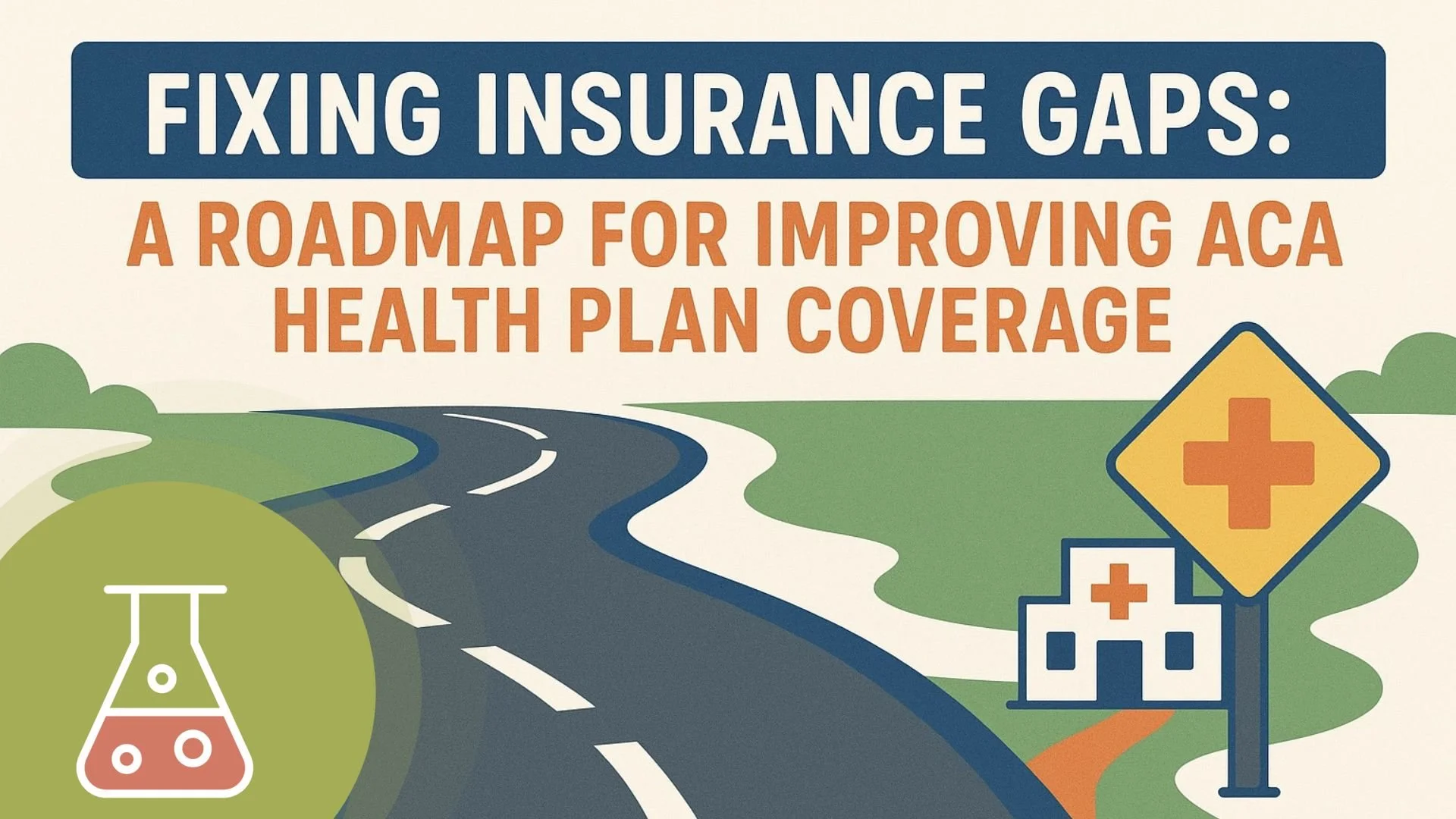
This Issue Brief presents new data showing that, despite increased federal subsidies and enrollment since 2022, many ACA exchange plans have raised OOP drug costs—undermining the law’s core promise of affordable care.


When measuring the value of new medicines, some countries rely on an outdated and incomplete methodology that understates the true value of innovative treatments. Setting prices in the U.S. based on these artificially low estimates of value would reduce investment in biomedical R&D and yield fewer novel medicines that address critical unmet needs of patients.

The methods many countries use to evaluate new medicines significantly underestimate the true societal benefits of innovative treatments. When high-income countries use traditional methods as a bargaining tool to deny coverage and/or secure lower prices, they free ride on the R&D investments of others and reduce patient access to novel medicines in their own countries.


A new survey demonstrates that a majority of consumers want health plans to lower out-of- pocket costs, but are concerned state government price controls will harm access and not reduce costs


The omission of assumptions about genericization means that CEAs may misrepresent the long run opportunity costs for drugs. The field needs clearer guidance for when CEAs should account for genericization, and for the inclusion of other price dynamics that might influence a drug’s cost-effectiveness.
Advocacy
FEATURED CONTENT

Do more for patients, preserve innovation: Fix the Inflation Reduction Act
1000+ Investors, researchers, patients, & innovators urge critical fixes to Senate Rx Bill that can, in a budget neutral way, lower Medicare Rx out-of-pocket costs and preserve biomedical research and development of both small molecule treatments and biologics.
NPLB's response to the Senate Finance Committee Minority Staff Request for Information (RFI) on Commonsense Policy Options to Lower Drug Prices for Patients. Read our response here.

We write as patients, people with disabilities, caregivers, and the organizations that represent us – people who live every day with serious, chronic, and rare diseases, and who depend on continued medical progress to survive and to thrive. We are urging you to oppose Most Favored Nation (MFN) drug pricing policies that would import foreign prices set using system known to delay and deny patient access, and to instead advance patient-centered solutions that can lower costs without sacrificing American innovation.

For decades, the United States has built an internationally respected research enterprise by empowering expert peer review, encouraging collaboration across institutions and disciplines, and providing researchers with the stability needed to pursue difficult scientific questions whose answers may take years to emerge. This system is not perfect and appropriately has built-in levers during the annual appropriations process that allow for accountability, but what we must not overlook is that it has produced extraordinary benefits for patients, taxpayers, and the American economy. The proposed rule would fundamentally alter that model.

As a coalition of biotechnology and pharmaceutical innovators, patient advocates, investors, and physicians working at the forefront of science and medicine, we write at this pivotal moment to recommend a leader who can secure and strengthen the U.S. Food and Drug Administration: Dr. Richard Pazdur.

As we indicated in our November 20th letter, No Patient Left Behind (NPLB)'s coalition of biotech investors, innovators, researchers, physicians, and patient advocates is deeply concerned about the direction of the FDA. We further wish to highlight and emphasize the issues raised in the December 3, 2025 Perspective published in the New England Journal of Medicine by twelve FDA commissioner predecessors.

US biotech innovators and investors value FDA prioritizing the recruitment and retention of clinical, scientific and regulatory specialists who offer innovators the benefit of experienced, case-specific guidance and problem-solving. This institutional expertise is especially important to small, early-stage, and pre-commercial US biopharma entrepreneurs, who account for the majority of new drug and biologic applications submitted to the FDA.

Our modern world needs a modern FDA with the capacity to accelerate access to safe, effective treatments while sustaining U.S. leadership in biotechnology. PDUFA VIII offers a historic opportunity to make the drug review program faster, more consistent, and more transparent by prioritizing core review activities, modernizing processes, strengthening accountability, and embracing patient-centered science.

American patients and taxpayers disproportionately fund the global R&D ecosystem that enables life- saving medical advances, while wealthy countries impose price controls that underpay by as much as 60% relative to their economic capacity. Adopting the Most Favored Nation (MFN) approach for price setting undermines U.S. leadership in medical innovation, hurts patients at home and abroad, and also impairs global progress against disease.

US biomedical innovators, the investors that support them, and the patients who depend on continued medical progress rely on the US Food and Drug Administration’s guidance and rigor to navigate policy and medical standards and to approve new medicines. The agency’s reorganization must preserve the institutional knowledge and core functionality that makes the FDA the world’s leading regulatory body.

When other countries pay less for drugs, they are free-riding on American innovation and our willingness to pay for new treatments. Forcing manufacturers to charge the same price that these other countries do would backfire. Instead, policymakers should use trade negotiations to pressure other wealthy countries to pay their fair share. No Patient Left Behind wrote to the Office of the United States Trade urging an end to unfair trade practices in drug pricing.

No Patient Left Behind wrote to the Office of the United States Trade Representative regarding the 2025 Special 301 Review, urging the agency to use its tariff and market access tools to force OECD countries to pay their fair share for medical innovation and end the free-riding of American biomedical innovation.

The independence and autonomy of the Food and Drug Administration (FDA) is a key part of ensuring that the biotech innovation ecosystem can continue to thrive. As an agency, it is the gold standard globally for determining risk-reward benefit in therapies for patients, and the world looks to it to lead the way. The people at the FDA facilitate the medical progress we all enjoy, and their work is a service to the American public.

There is an assault on the foundation of U.S. science. Recent actions—including arbitrarily restricting scientists' ability to speak and travel and stalling the dispersal of previously awarded NIH and NSF funds—are more than bureaucratic disruptions. They are an assault on the foundation of biomedical and technological progress.

No Patient Left Behind (NPLB) wrote to the Centers for Medicare and Medicaid services (CMS) urging the agency to allow Medicare to cover anti-obesity medications (AOMs) and to strengthen patient protection “guardrails” through better oversight of Medicare Advantage Part D (MAPD) plans.

Too many Americans cannot afford their out-of-pocket costs (deductibles, copays, or coinsurance) in addition to their premiums. In some cases, this is not because their employer does not want to offer first-dollar, pre-deductible coverage with low or no copays, but because IRS regulations require that, to offer a Health Savings Accounts (HSA), self-insured employers must ensure that their workers pay unnecessarily high out-of-pocket costs. We ask that the Treasury department remove a barrier to such coverage by making a slight regulatory change that would enable self and fully insured companies to continue to offer HSAs and offer first-dollar coverage of medicines with low/no copays if they so choose.

No Patient Left Behind wrote to the Centers for Medicare & Medicaid Services (CMS) asking the agency to adopt rules that ensure that patients—not health plans or PBMs—see savings from the implementation of Medicare price setting.

CBO’s ability to correctly model investor decision-making is vital to our country’s ability to establish policies that achieve lasting biomedical affordability and continued innovation. In support of CBO’s efforts to improve its model, this letter emphasizes a number of economic and financial first principles, notably that investment is incentivized by expected returns based on discounted profits, not revenue, and adjusted for expected dilution from financings.

Under the drug pricing provisions of the Inflation Reduction Act, small molecule treatments will face Medicare “negotiation” (price setting) that makes brand medicines functionally generic just 9 years after FDA approval. This policy will unwisely skew investment towards harder to manufacture biologics and away from small molecule treatments for diseases of aging. Without both kinds of medicines, we will all be worse off.

No Patient Left Behind (NPLB) wrote to the Centers for Medicare and Medicaid services (CMS) urging fixes to its plan for implementation of the Inflation Reduction Act. NPLB suggested fixes that will lower out-of-pocket costs for beneficiaries and protect small molecule innovation.

400+ biotech and pharma executives voice support for the FDA's indispensable role in regulating new medicines. The letter warns that judicial orders undermining the decisions of the FDA would destroy the basic infrastructure necessary for continued medical innovation.

No Patient Left Behind (NPLB) wrote to the Centers for Medicare and Medicaid services (CMS) warning that the exemptions of the Inflation Reduction Act fail to provide adequate protections for orphan drugs and other small molecule treatments.

33 investors whose funds manage $86B in capital detail the ways in which the imbalanced price setting provisions in the Inflation Reduction Act will warp investment in research and development and lead to fewer new cures.

1000+ Investors, researchers, patients, & innovators urge critical fixes to Senate Rx Bill that can lower Medicare Rx deductibles, give the government greater power to set prices, and make sure biopharma research and development remains vigorous for both small molecule treatments and biologics.

Biopharma patient advocates, innovators, and investors continue to urge Congress to fix the proposed Build Back Better (BBB) legislation to improve patient Rx affordability and preserve biopharma innovation.

Investors, economists, academics, and industry executives urge reforms to lower out-of-pocket costs. Price controls, they warn, could cease biopharma investment and prevent future cures.
We’re building support across the biotech ecosystem
BECOME A FIRST RESPONDER & THOUGHT PARTNER
Sign up to receive action alerts. Help protect access to lifesaving medicines & preserve innovation for those still waiting for a cure.